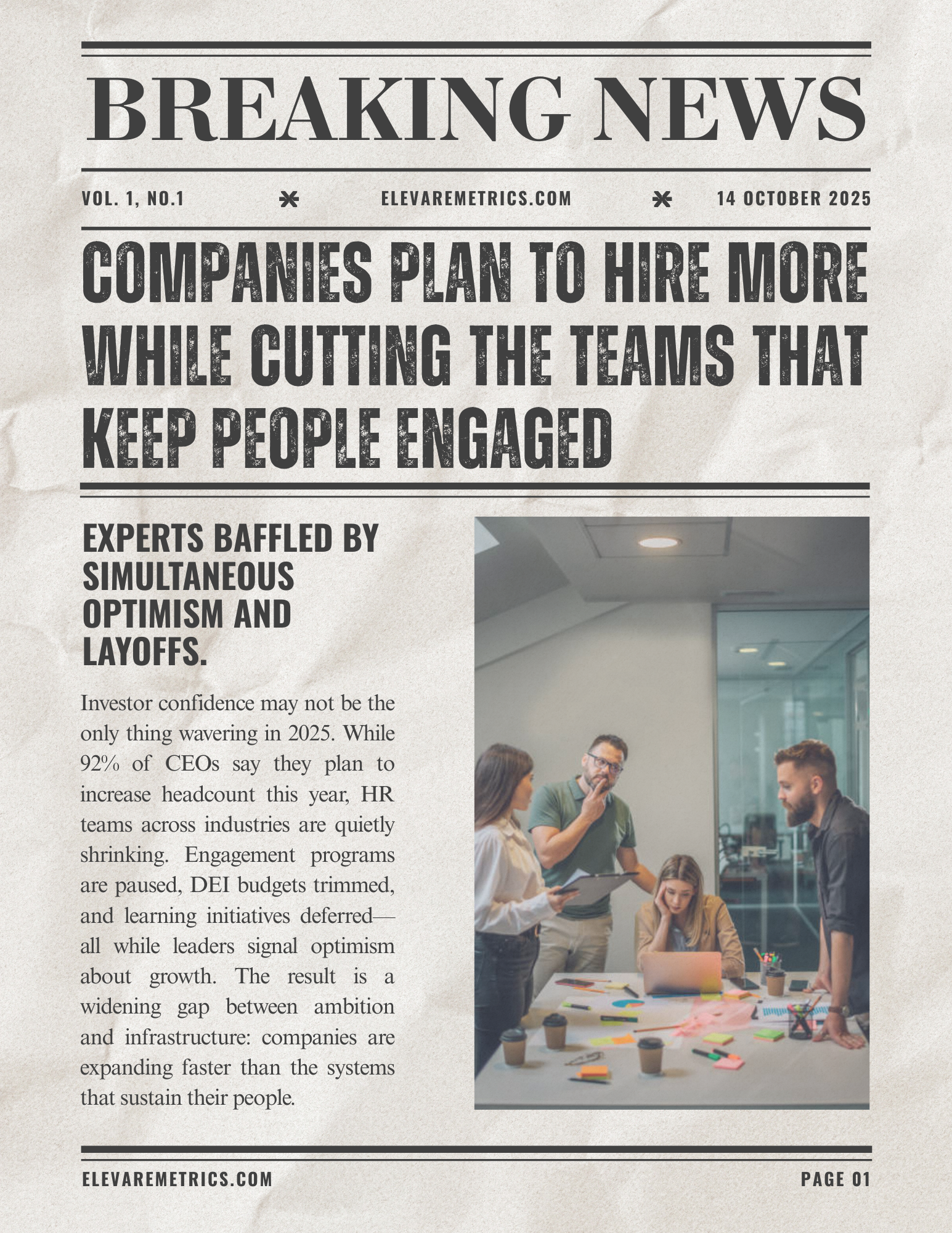


AI has promised to revolutionize HR, predicting turnover, automating hiring, surfacing insights at scale. Yet many organizations are discovering that while the dashboards look impressive, the outcomes feel flat.
The problem isn’t the technology itself. It’s the assumption that more data automatically means better decisions.
AI can show you patterns, but it can’t understand people.
In HR, that distinction matters. Because when you’re dealing with human experience, context and empathy aren’t “nice to have.” They’re the difference between information and intelligence.
Where ROI Really Fails
AI doesn’t fail because it’s inaccurate. It fails because it’s incomplete.
A system can detect who’s likely to leave, but it can’t tell you why they’re thinking about leaving. It can flag sentiment, but it can’t sense tone, exhaustion, or quiet disengagement.
And when organizations treat AI as a replacement for human interpretation instead of a partner to it, they lose what makes people data valuable in the first place, its humanity.
Empathy Is a Competitive Advantage
The future of HR analytics isn’t about bigger models or faster automation. It’s about human understanding: connecting what the data says with how people actually feel.
A good analyst can recognize the subtle difference between “low engagement” and “disillusionment.” They can see that a decline in survey scores isn’t just a metric, it’s a signal of trust slipping, leadership under strain, or a team feeling unseen.
AI can quantify performance, but empathy interprets meaning.
And meaning is what drives decisions that stick.
The Trust Factor
There’s another reason ROI often stalls: data safety.
Employees are increasingly aware that their feedback is analyzed by algorithms, not just people. If they don’t trust how that data is handled, or worry that anonymity and context will be lost in automation, honesty declines, participation drops, and the insights become skewed.
The best cultures treat data with the same care they expect from their people: securely, ethically, transparently.
Bringing Humanity Back Into the Equation
The most effective HR organizations pair technology with interpretation.
AI can flag patterns, but it takes human insight to turn them into action:
- Translating survey data into empathy-driven decisions
- Protecting employee privacy while still learning from the data
- Reading not just what people said, but what they meant
When technology and empathy work together, organizations don’t just automate reporting, they build understanding.
The Elevare Perspective
At Elevare Metrics, we believe data alone can’t change culture, understanding does.
We use AI and advanced analytics to surface insight, but our real work begins where the algorithm stops: interpreting the “why” behind the numbers, safeguarding the data that builds trust, and helping leaders make decisions that respect both evidence and empathy.
AI can organize your information. We help you understand it, responsibly, securely, and with the human context that drives real ROI.