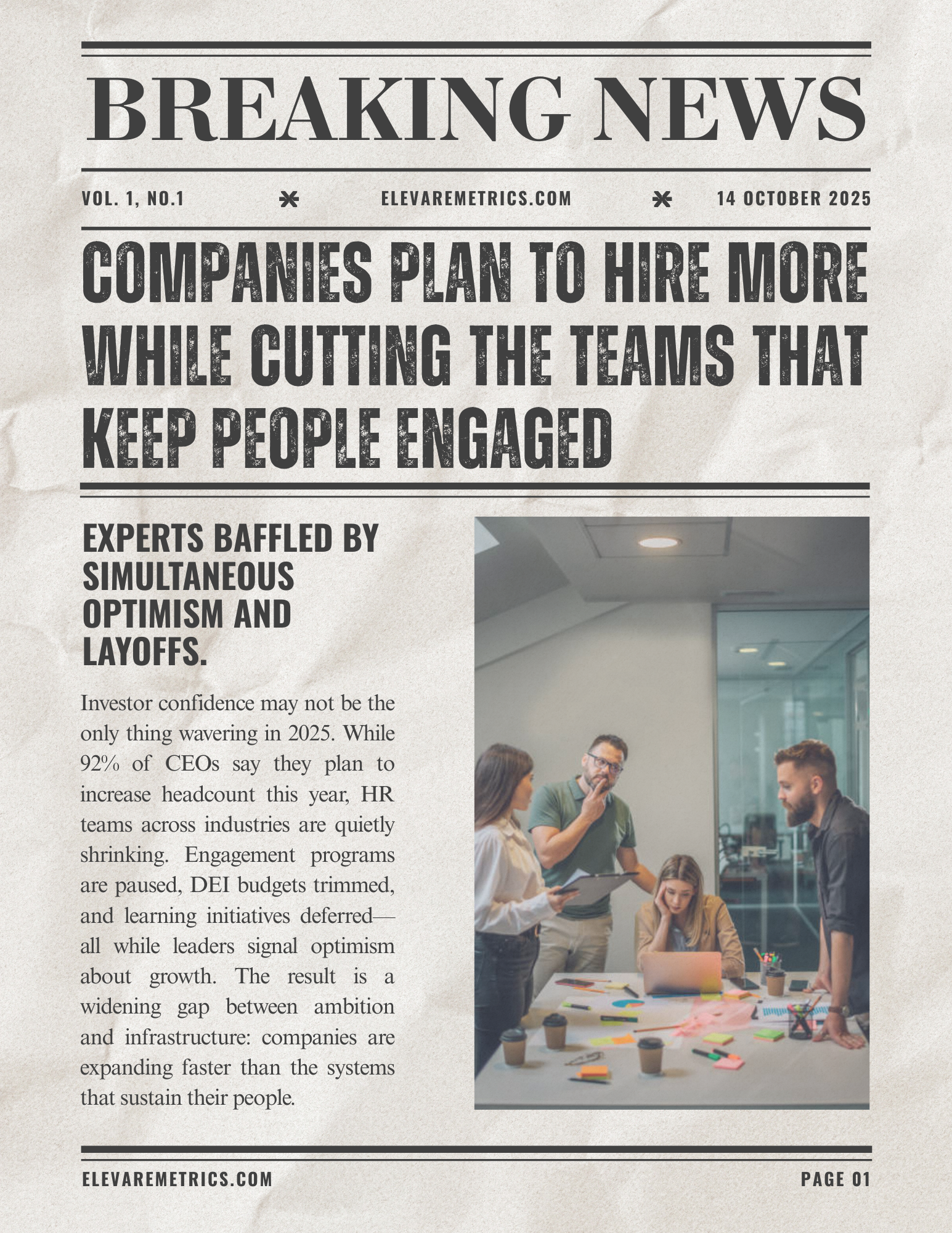


Culture doesn’t collapse overnight, and it doesn’t flourish by accident.
It’s built through small, everyday decisions that either reinforce trust and belonging or quietly erode them.
A healthy workplace culture isn’t abstract. It’s visible in both data and behavior; in engagement scores, turnover patterns, and how people show up when no one’s watching.
Organizations that treat culture as a measurable asset, not a morale perk, are the ones that retain great people and grow sustainably.
Below are five signs of a healthy workplace culture, drawn from research and observation.
1. Psychological Safety and Open Communication
When people feel safe to speak up, question assumptions, and admit mistakes, you’re seeing psychological safety at work; the foundation of any healthy culture.
Harvard’s Division of Continuing Education calls trust and psychological safety “defining traits of high-performing workplaces.” When those are present, innovation flourishes and mistakes become learning opportunities instead of blame cycles.
What to look for:
- Employees openly share ideas or feedback without fear
- Mistakes are discussed constructively, not punished
- Surveys show strong agreement with “I feel safe voicing concerns”
Innovation stalls when people stay silent, not when they speak up.
2. Sense of Belonging and Values in Practice
Culture isn’t what’s printed on the wall. It’s what people feel every day.
When employees believe they matter, and when company values actually shape decisions, you have a culture where belonging and integrity reinforce each other.
Barna Group found that only 23% of U.S. employees strongly agree their organization’s culture is healthy, meaning most workplaces struggle to align what they say they value with what they do.
What to look for:
- Consistency between leadership actions and stated values
- Employees describing their workplace with pride
- High scores on belonging, inclusion, and fairness
When values live in practice, not just posters, people stay, and thrive.
3. Recognition, Growth, and Development
People don’t just want to work. They want to grow.
Recognition and development are two of the strongest predictors of engagement and retention. Barna Group’s workplace study found that “opportunities to grow and develop” are among the top indicators of a healthy company culture.
What to look for:
- Frequent, specific recognition, not just annual reviews
- Clear pathways for learning and advancement
- Balanced internal promotions versus external hires
Growth isn’t a perk; it’s proof the organization invests in its people.
4. Well-Being, Flexibility, and Balance
Performance and well-being aren’t opposites, they’re partners.
Organizations that prioritize employee health see higher engagement, lower burnout, and stronger retention. A McKinsey Health Institute study found that holistic well-being investments lead to better adaptability and performance across all industries.
What to look for:
- Leaders modeling balance, not glorifying overwork
- Employees using PTO without guilt
- Declining signs of burnout, absenteeism, or “always-on” behavior
Healthy cultures treat rest as part of productivity, not its enemy.
5. Fair, Trusting Leadership and Transparency
Leaders set the tone for everything else.
Trust, honesty, and consistency build the foundation for psychological safety and engagement. SHRM identifies honest and unbiased management as one of the global drivers of positive workplace culture.
What to look for:
- Employees saying they trust leadership decisions
- Transparent communication in good and bad times
- Leaders following through on commitments
People rarely quit their job, they quit misplaced trust.
Key Takeaways
- Culture is measurable. Your survey data, turnover, and feedback trends tell a story long before problems surface.
- Alignment matters. Healthy cultures live their values across every level, not just in leadership messages.
- Recognition and growth fuel retention. When people feel seen and supported, they stay invested.
- Balance isn’t a luxury. Sustainable performance depends on well-being and flexibility.
- Trust starts at the top. Transparent, fair leadership is the ultimate culture safeguard.
The Bottom Line
A healthy workplace culture doesn’t happen by luck, it’s built intentionally, measured consistently, and led with empathy.
When you see psychological safety, belonging, growth, balance, and trust all reflected in how people experience work, you’re not just maintaining morale, you’re cultivating long-term success.
At Elevare Metrics, we help organizations quantify and strengthen culture through survey intelligence and contextual analytics, turning employee feedback into decisions that drive performance, retention, and well-being.
Sources
- Harvard DCE – Why Workplace Culture Matters
- Barna Group – Gen Z and Workplace Culture
- Huler – Signs of a Great Company Culture
- McKinsey Health Institute – Thriving Workplaces
- SHRM – Global Drivers of Positive Workplace Culture